

The Wilton Diptych, c. 1395–1399. The National Gallery, London
On the Cusp Between Medieval and Renaissance
Workshop · with Eric Mentzel, University of Oregon
Sunday, October 18, 2026 · 1:00–4:00 PM
Grace Memorial Episcopal Church, 1535 NE 17th Ave, Portland
We tend to talk about the Renaissance as a clean break from the medieval world — but was it really? In this workshop, guest presenter Eric Mentzel challenges the tidy boundaries we've inherited and makes a case for continuity over rupture. Together we'll explore the pivotal transition from medieval to Renaissance musical style through the music of Guillaume Dufay, John Dunstable, and Leonel Power — three composers whose work sits right at that fault line, revealing just how blurry the line really is.
$40

El Transparente, Toledo Cathedral
Music of the Iberian Peninsula
Workshop · with the Portland Recorder Society
Sunday, November 29, 2026 · 1:00–4:00 PM
Grace Memorial Episcopal Church, 1535 NE 17th Ave, Portland
While the polyphonic style of the 16th century is often framed as a story of Rome, Venice, and the Franco-Flemish north, some of the era's most searching and dramatic music was being written in Spain and Portugal. Composers like Cristóbal de Morales, Francisco Guerrero, and Tomás Luis de Victoria trained in the same contrapuntal tradition as their Italian contemporaries — several worked in Rome itself — but brought home a sound marked by intense chromaticism, dramatic word-painting, and an almost mystical devotional fervor shaped by the spiritual climate of the Counter-Reformation.
$20. Portland Recorder Society members attend free.

Roman de la Rose, Bruges c. 1490–1500. British Library, Harley MS 4425, f. 24
The Art of Courtly Love
Workshop
From Pop to Art: Courtly Love Song
Sunday, January 31, 2027 · 1:00–4:00 PM
Grace Memorial Episcopal Church, 1535 NE 17th Ave, Portland
Long before "art song" was a category, love songs were simply the pop music of the court — tunes for dancing, flirting, and passing the time, built on simple, catchy melodies anyone could pick up by ear. Over the course of the 15th and 16th centuries, French and English composers took these vernacular love songs and, piece by piece, dressed them in the full apparatus of learned polyphony: imitative counterpoint, text painting, increasingly intricate part-writing. The result is a repertoire that lets us watch, almost in real time, popular music becoming art music.
$40

John Rose, bass viol, c. 1600. The Metropolitan Museum of Art
Orlando Gibbons: The Verse Anthem
Workshop · with Cascadia Viols
Saturday, February 27, 2027 · 1:00–4:00 PM
Grace Memorial Episcopal Church, 1535 NE 17th Ave, Portland
By the early 17th century, English church composers had developed a distinctly hybrid form: the verse anthem, which alternates full choral sections with passages for solo voice accompanied not by organ but by a consort of viols. It's a texture that sits somewhere between sacred polyphony and chamber music — intimate, expressive, and built to showcase both a solo singer's declamation and the instrumentalists' close ensemble playing.
$40

Sadler/Willmott partbooks, c. 1585
The Ordinary and the Sublime
Workshop · with Dr. Kerry McCarthy
English Sacred Music in 1527
Sunday, March 14, 2027 · 1:00–4:00 PM
Grace Memorial Episcopal Church, 1535 NE 17th Ave, Portland
Rose City Renaissance sets the time machine 500 years back to March 1527 to experience an afternoon with a group of Tudor musicians. This workshop will explore the whole range of styles and venues in Renaissance England, from big open-air public events to exclusive performances in small private chapels. The centerpiece of the day will be John Browne's monumental Stabat Mater, a splendid 15-minute piece from the Eton Choirbook, which we will sing and play by candlelight at the end of the workshop.
$40

Roman de la Rose, Bruges c. 1490–1500. British Library, Harley MS 4425
The Month of Maying
Workshop
English Madrigals
Saturday, May 1, 2027 · 1:00–4:00 PM
St. James Lutheran Church, 1315 SW Park Ave, Portland
By the time the madrigal crossed the Channel from Italy in the 1580s, English composers had made it entirely their own — trading some of the Italian style's chromatic intensity for a lighter, more pastoral charm, full of shepherds, nymphs, and the perennial English delight in springtime. Few images captured that spirit better than May itself: garlands, dancing, and the "fa-la-las" that became the genre's unmistakable signature, most famously in Thomas Morley's Now is the Month of Maying.
$40
About the Workshops
RCR Workshops are open to Singers and Instrumentalists (A=440) of all skill levels. We will explore music from a given theme: that theme could be a specific place, composer, publication, genre, text, or historical event.
Rehearsals will be fun and informal, with enough time built in to talk about the music, and without the pressure of a performance. Participants are encouraged to prepare the music ahead of time if they are not excellent sight-readers, but mistakes will elicit an understanding chuckle rather than a sharp glare from the podium.
Each workshop will consist of:
- a 30-minute lecture on the topic of the day
- a two hour guided-rehearsal featuring a mixture of well-known and unknown gems from the topic area
- a mini-recital given by the professional singers who act as section-leaders and vocal coaches during the rehearsal
Registered participants will receive the following resources two weeks prior to each workshop:
- marked .pdf scores of all of the repertoire, with translations of the texts.
- a curated selection of recordings to help prepare the music and be introduced to the interpretative challenges of the repertoire.
- recommended academic articles and book chapters to help broaden the participant's understanding of the cultural, religious, political, and sociological context of the music and the biography of the composer.
Fees: $40 for the three-hour workshop. These fees go towards the rental of our rehearsal venue as well as the contracting of professional singers who serve as section leaders and vocal coaches during the workshop.
Workshops take place at Grace Memorial Episcopal Church, 1535 NE 17th Ave, Portland, and at St. James Lutheran Church, 1315 SW Park Ave, Portland, OR 97201.
Our Section Leaders
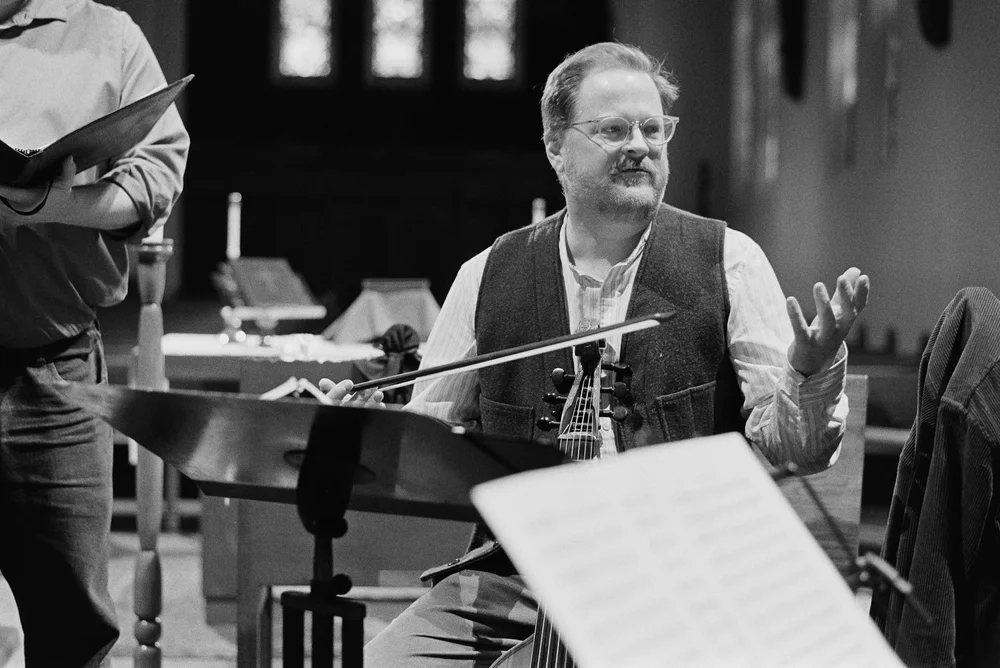
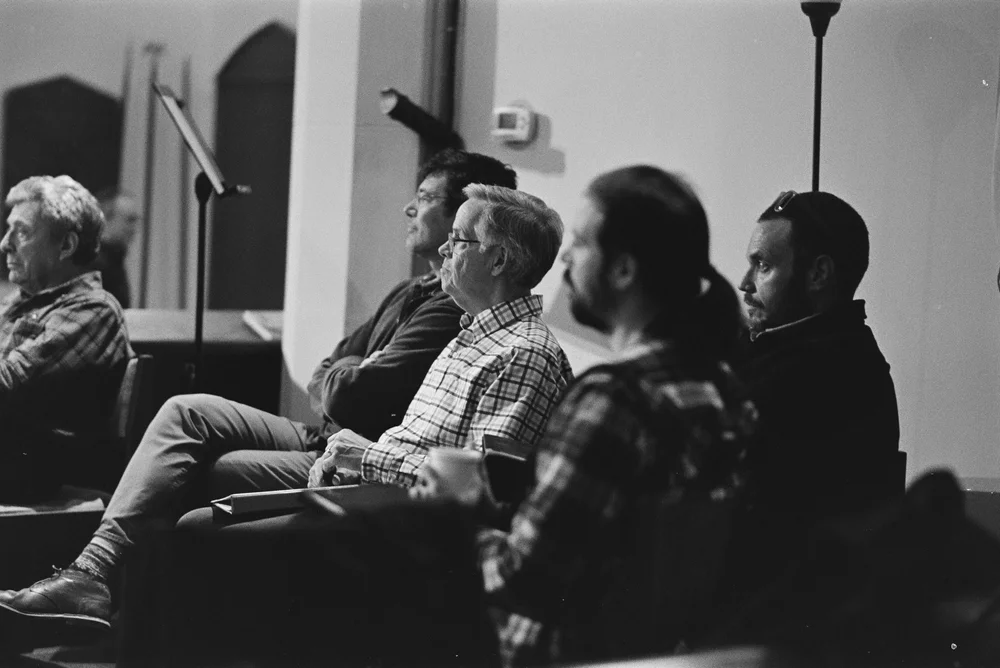
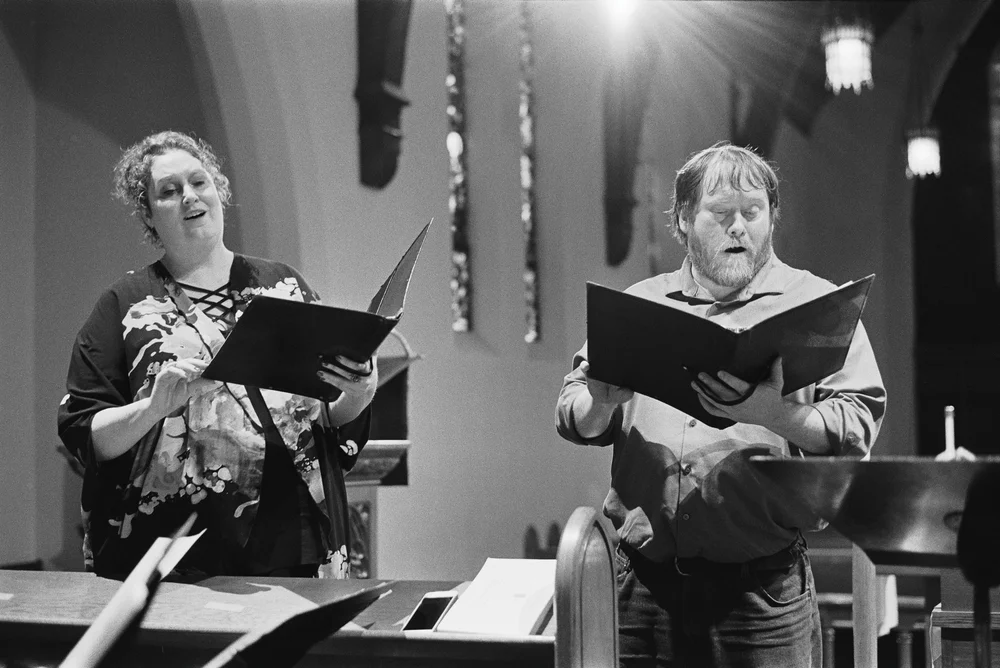
Each Rose City Renaissance workshop is anchored by professional section leaders who have been with us since the founding. They sing alongside our participants, supporting each section from within and bringing experience from Portland's finest ensembles to every workshop.
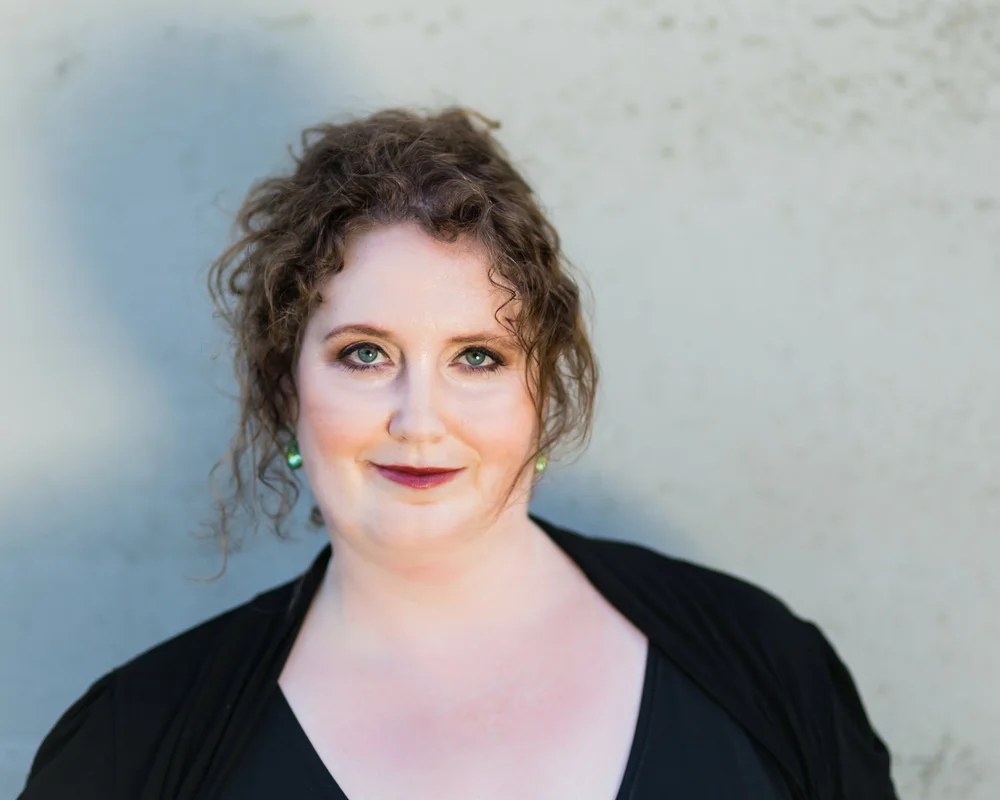
Kristen Buhler
Alto
Kristen is a native Oregonian and lover of music from all genres. Praised for her "smooth and heartfelt" singing (Artslandia), she has performed, toured, and recorded professionally with many local groups including Cappella Romana, In Mulieribus, Cantores in Ecclesia, Resonance Ensemble, The Ensemble of Oregon, Portland Baroque Orchestra, Oregon Catholic Press, The St. Tikhon Choir, Third Angle, 45th Parallel, and The Julians.
She earned Bachelor of Arts degrees from George Fox University in Newberg, OR in both Vocal Music Performance and Writing/Literature, then went on to Portland State University where she garnered a Master of Music degree in Conducting, and a Master of Science degree in Special Education (vision emphasis). By day, Kristen teaches braille and assistive technology skills to students with visual impairments. She has been a co-author of a national braille curriculum entitled Building on Patterns for the past 19 years, published through American Printing House in Louisville, KY. In her spare time, she is always up for pub quiz, or a spur of the moment trip just about anywhere.
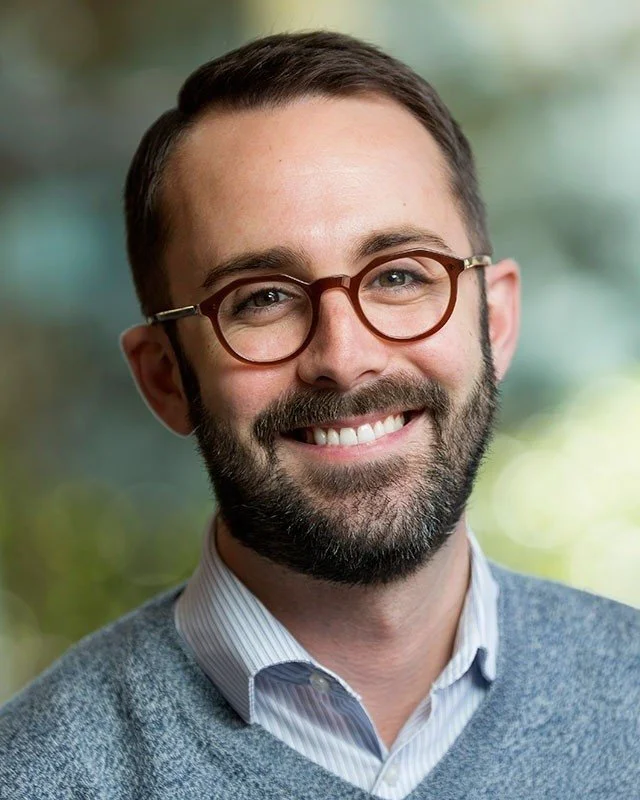
Chris Engbretson
Tenor
Chris Engbretson holds a B.A. in piano performance from Linfield College, and an M.M. in choral conducting from Northern Arizona University. Having crafted his career as a pianist, singer, and conductor, Chris has worked extensively both locally and abroad. His conducting and piano credits include Dido and Aeneas, Town Hall, A Hand of Bridge, The Telephone, Into the Woods, Beauty and the Beast, Little Shop of Horrors, Once Upon a Mattress, Spring Awakening, Annie, 9 to 5, Musical of Musicals, Clue, Britten's The Rape of Lucretia, and collections of scenes from the repertory.
He regularly performs with several Portland vocal ensembles including Cantores in Ecclesia, Resonance Ensemble, Evenstar, and Cappella Romana. Chris currently works on the Genitourinary and Prostate Malignancies Research Program at the Knight Cancer Institute, where he coordinates clinical trials for cancer patients.
Michael Hilton
Tenor
Michael Hilton, tenor, is an active member of the Portland choral music community. He currently sings with Cantores in Ecclesia, Cappella Romana, and Resonance Ensemble. He has been a soloist for many years with the William Byrd Festival. A native of Portland, he received his Bachelor of Arts in Vocal Performance from Pacific University under the tutelage of Scott Tuomi. Michael is known for his lovely floating tenor voice.
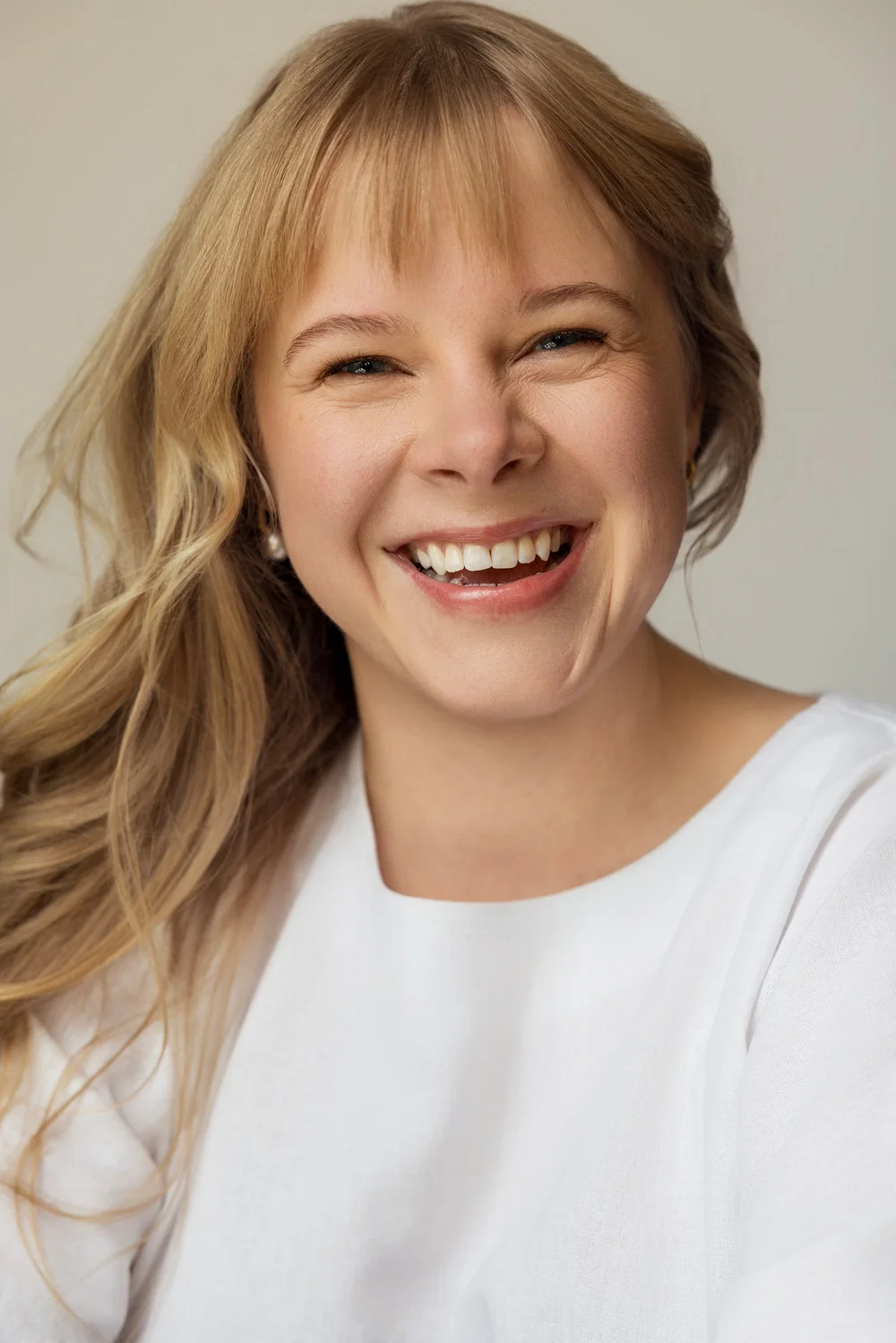
Vakarė Petroliūnaitė
Soprano
Praised for her "wonderful sensitivity" and "sparkling tone," soprano Vakarė Petroliūnaitė brings radiant musicality and heartfelt connection to every performance. Her repertoire spans centuries — from Hildegard's Ordo Virtutum to the U.S. premiere of Ēriks Ešenvalds' Passion and Resurrection — guided by deep curiosity and expressive clarity.
She is especially drawn to the intimacy and emotional depth of Bach's music, having performed as soprano soloist in numerous cantatas — including BWV 32, 51, 84, and 202 — and at the Leipzig Bach Festival, honoring his work at its source. Vakarė is also a passionate advocate for new music and thrives on the creative dialogue of working directly with composers.
A devoted collaborator, she has performed with Portland Baroque Orchestra, Cappella Romana, Resonance Ensemble, Fear No Music, 45th Parallel, Vancouver Symphony, and the Bach Cantata Choir, among others. Her singing is often described as luminous, thoughtful, and deeply engaging.